How Does It Work: Contingency & Regression Planning
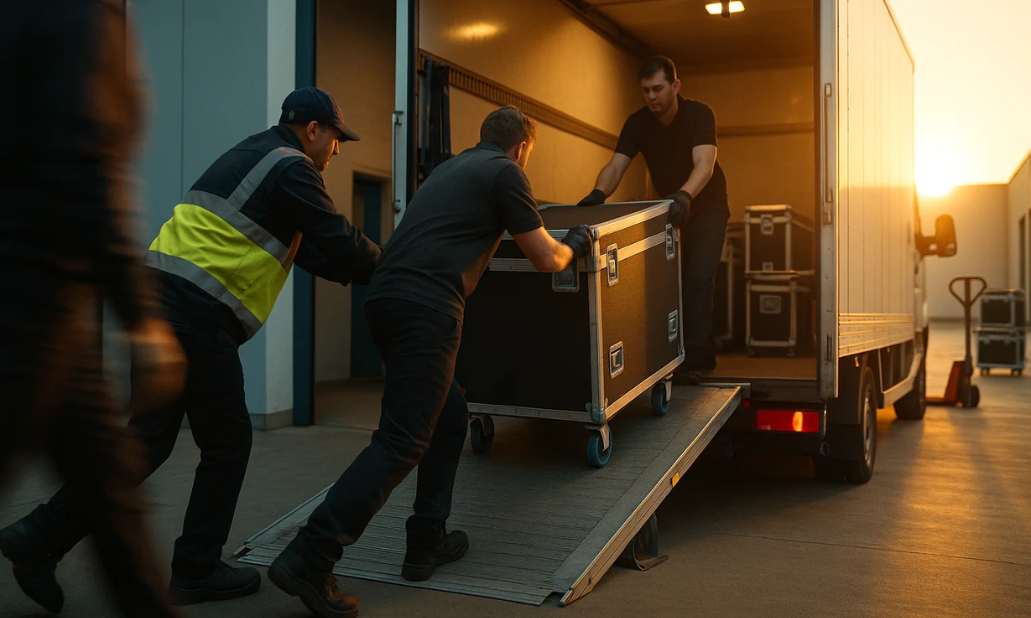
We pre-build a regression path alongside the primary runbook: return logistics, reverse labelling/manifests, cached flight cases, and dedicated vehicles on standby. Loads are split across multiple vans to reduce single-point risk and meet insurer conditions, each tracked with GPS and tamper seals.
If requested: during the window a second PM shadows the control room and a reserve crew is callable within SLA. Traffic planning aligns route holds, lift slots, and alternates; if thresholds are breached, the rollback plan triggers immediately—kit is moved back, evidence is captured, and the retry window is reset cleanly.
STANDBY & ROLL-BACK
Return-to-source plan with cached cases, reverse labels/manifests, and pre-booked slots at both sites.
SPLIT LOADS
Multi-vehicle strategy with seals, GPS tracking, independent ETAs, and insurer-approved risk reduction.
DUAL-PM COVER
A second PM shadows the window; reserve engineers on-call to absorb delays, overruns, or site holds.
TRAFFIC & DIVERSIONS
Timed holds, alternate routes, lift/door scheduling, and live diversion protocol across all legs.
SURVEYS & READINESS
In-depth on-site and live video route checks—turns, lifts, gradients, floor loads—logged and signed off.
Layered contingency by design. We build a secondary plan that can run in parallel with the primary move: cached flight cases, reverse manifests/labels, and pre-booked return slots at both sites. Loads are split across vehicles (separate ETAs, seals, and policies) to remove single-point failure and to meet insurer conditions for high-value or populated racks.
Clear triggers, instant actions. Rollback is tied to objective triggers—test failures, power/route blocks, time threshold breaches, or CAB hold. When a trigger fires, the second PM activates the standby crew, diverts vehicles per the traffic plan, and executes the return script (re-label, re-manifest, re-site) while the control room keeps stakeholders updated at fixed intervals.


 Standby & roll-back service